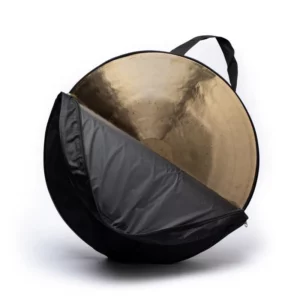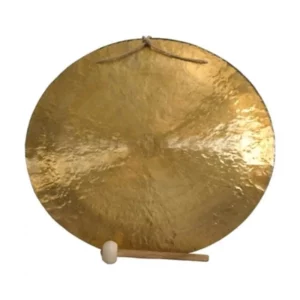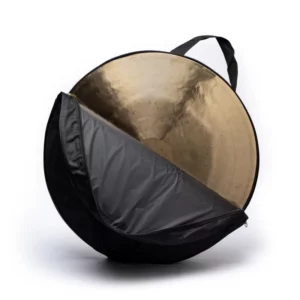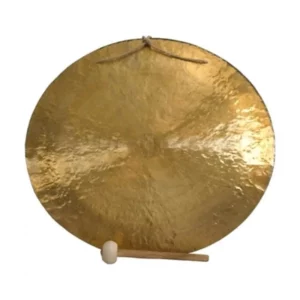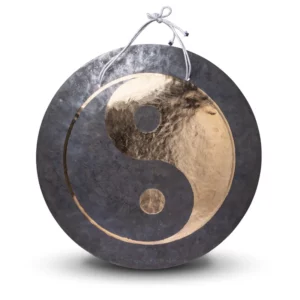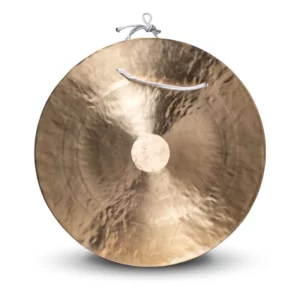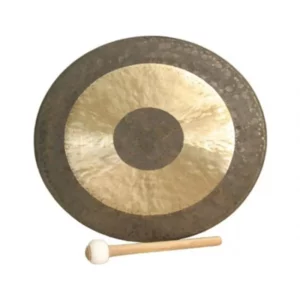
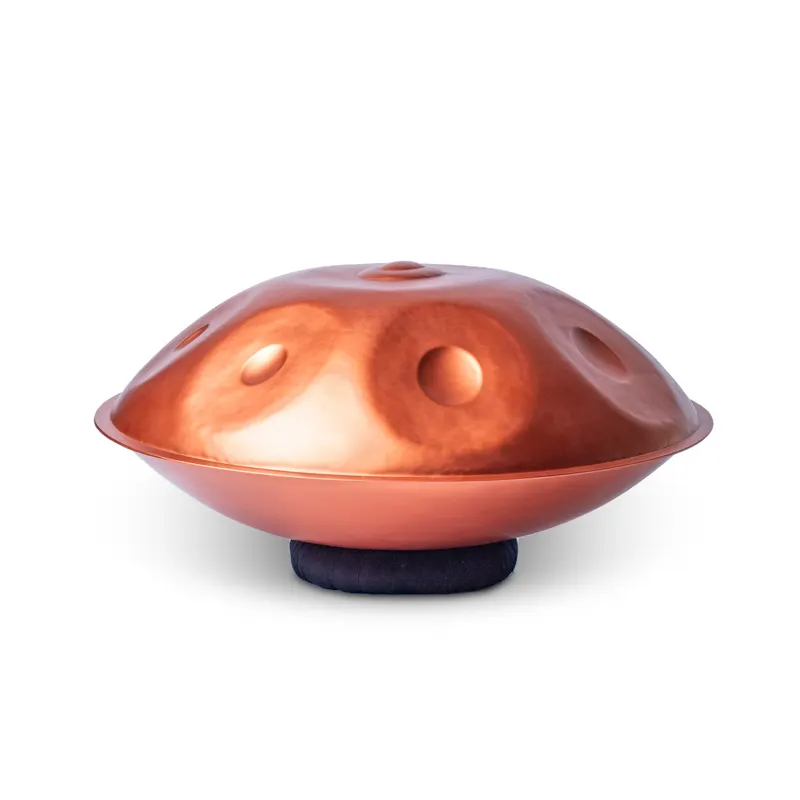
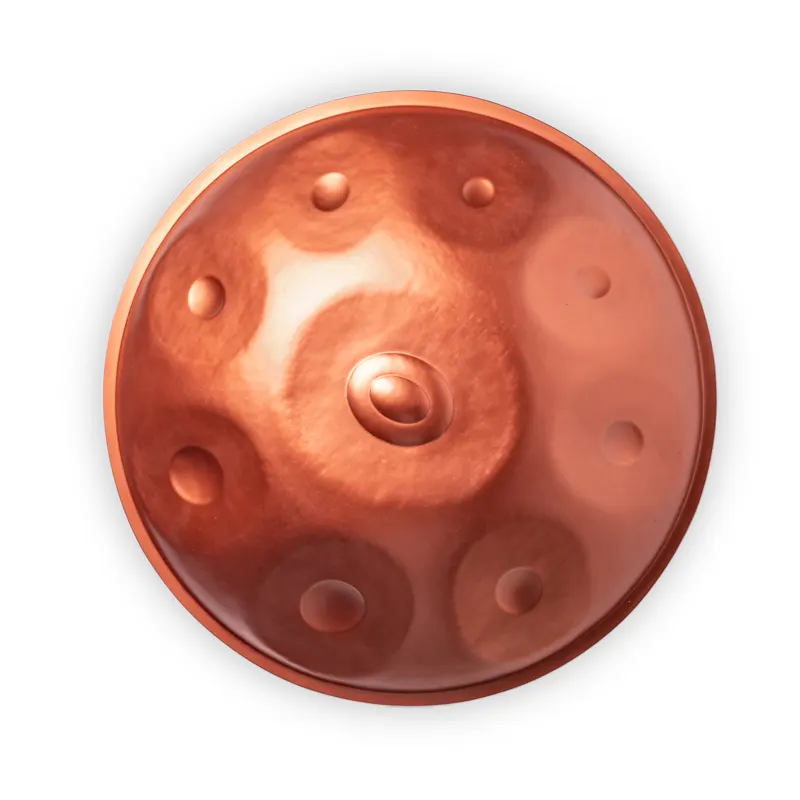

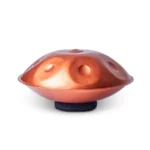
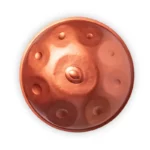

High resonance steel Hand Pan (hang) with copper coloured metallic coating. The handpan is a versatile instrument that can be played in a variety of musical styles, including jazz, world music, and ambient music.
How it is played
The handpan is played by striking the tone fields with the hands. The tone circle is arranged in a cross pattern, from low to high notes, allowing the player to move up or down the scale by striking the tone fields with alternating left and right hands.
The player can use a variety of techniques to produce different sounds, including tapping, slapping, and using the fingertips or the flat of the hand.
How it works
The basic structure of a handpan is influenced by the physical properties of the Trinidadian steelpan, Thai gong, and Indonesian Gamelan. It consists of two metal half-shells that are adhered together, with a central tone field called “Ding” and a minimum of seven tone fields arranged in a circle on the upper side. The bottom side has an opening known as “Gu,” which creates a bass note through the Helmholtz resonance effect, similar to blowing over the top of a bottle. Some builders and players refer to the handpan as “pantam,” a term that combines “pan” and “ghatam,” two instruments that played a role in the creation of the Hang.